Scholarship Overview
You apply directly with the provider. We never charge for applications or ask for payment details. How we verify scholarships
People Also Checked: MOPGA 2027 Visiting Fellowship: Early Career Research Grants for Climate & Environmental Research in France (Fully Funded)
Overview
TROPIMUNDO is an Erasmus Mundus Joint Master (Degree) in Tropical Biodiversity and Ecosystems, funded by the European Commission and excellence-labelled for its academic quality. The programme addresses the global crisis of species extinction and ecosystem degradation through a unique curriculum combining theory, field practice, and independent research.
Students spend two years studying across multiple universities, including a full semester in the tropics conducting field courses and research. The programme leads to a joint master’s degree awarded by the European institutes visited.
People Also Checked: INTERPOL Internship Program 2027: Paid International Police Organization Internship (Fully Funded)
Why This Matters for African Applicants
For applicants from Zimbabwe and the SADC region, TROPIMUNDO offers exceptional value. The programme includes established partnerships with African universities: Université Cheikh Anta Diop de Dakar (Senegal), Université d’Abomey-Calavi (Benin), Université de Dschang (Cameroon), and Technical University of Mombasa (Kenya). These partnerships enable African students to conduct tropical fieldwork on their own continent while building international research networks.
The VLIRUOS scholarship component specifically prioritises students from certain developing countries, which may include SADC nations. This creates a pathway for fully funded study that recognises and builds upon regional expertise in tropical ecology.
People Also Checked: ARC–GSSP Scholarship Programme 2026/2027: Climate Risk Leaders for Africa (Fully Funded)
Programme Structure
The 4-semester trajectory follows a consistent pattern:
- Semester 1: Brussels (Belgium) — foundational competences at ULB or VUB
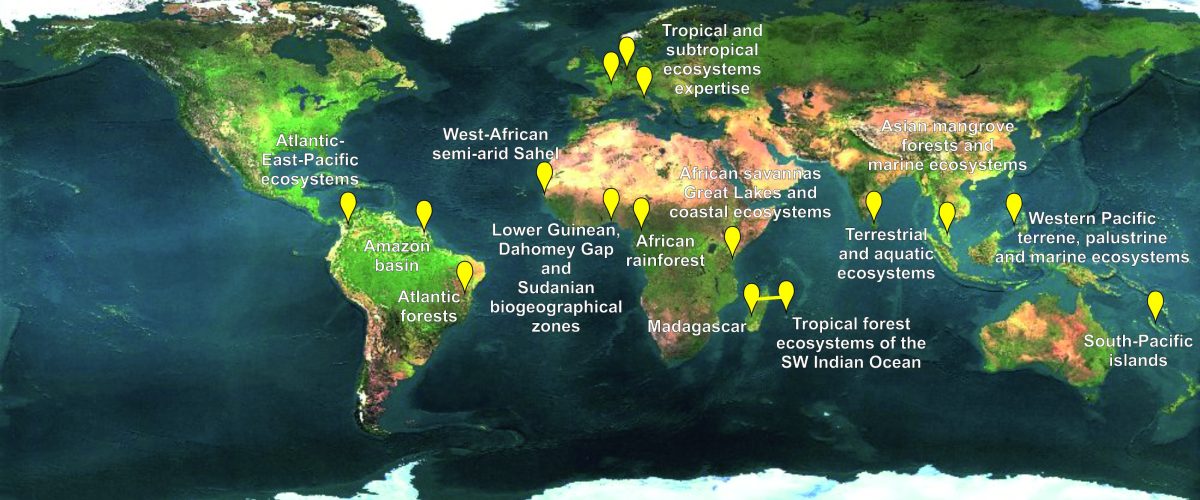
- Semester 2: Tropical field semester — choose from Caribbean, Amazonian, African, Asian, or Oceanian partner universities
- Semester 3: European specialisation — different university from Semester 1
- Semester 4: MSc thesis research — return to starting institution
Specialisations include: tropical flora and vegetation evolution; faunistic assemblages; biodiversity informatics and database management; tropical ecosystem dynamics; conservation and restoration ecology; and tropical ethnobotany with traditional ecological knowledge.
Participating Institutions
European partners: Université Libre de Bruxelles (Belgium), Vrije Universiteit Brussel (Belgium), Sorbonne Université (France), Muséum National d’Histoire Naturelle (France), Università degli Studi di Firenze (Italy), Université de la Guyane Française (French Guiana), Université de La Réunion (France), Université de la Nouvelle-Calédonie (France).
Non-European partners: Universidad de Antioquia (Colombia), Universidade Estadual de Santa Cruz (Brazil), Université Cheikh Anta Diop de Dakar (Senegal), Université d’Abomey-Calavi (Benin), Université de Dschang (Cameroon), Technical University of Mombasa (Kenya), University of Ruhuna (Sri Lanka), Universiti Malaysia Terengganu (Malaysia), University of The Philippines Diliman (Philippines).
Tuition and Fees
Self-funded students pay:
- €9,000 per year — students from Third Countries not associated to Erasmus+ (most non-European countries)
- €4,500 per year — students from EU Member States and associated Third Countries
Self-funded students receive a €500 restitution for each €4,500 paid. Tuition includes consortium enrolment fees and insurance, but excludes visa costs, accommodation, living expenses, and travel.
Scholarship Opportunities
Two funding streams exist:
- Erasmus Mundus scholarships: Full scholarships covering tuition, living allowance, travel, and installation costs. Open to all nationalities, pending EC approval.
- VLIRUOS scholarships: Available to students from priority countries, with specific funding for trajectories through Kenya and the Philippines.
Both scholarships are awarded on excellence criteria evaluated by a Selection Committee comprising all Local Coordinators.
Application Timeline
For 2027–2028 intake:
- First call (scholarship seekers): Currently open — deadline November 2027
- Second call (self-funded only): Expected February 2027
For 2028–2029 intake:
- Scholarship call expected to open: September 2027
Applications are evaluated as a batch after the first call deadline. If places remain, second call applications are treated first-come-first-served.
Eligibility Requirements
- Bachelor of Science degree (180 ECTS equivalent) in Biology, Natural Sciences, Environmental Sciences, or closely related field from an accredited university
- English proficiency required; French and/or Spanish beneficial depending on trajectory
- Language courses offered in Semesters 1 and 3 to support trajectory needs
Admissions may be conditional on obtaining final degree certificate or language proof before programme start.
Application Process
- Create personal account through the online Application, Information and Management (AIM) tool
- Complete application form with academic and personal details
- Upload required documents (transcripts, degree certificate or enrolment proof, language certification, CV, motivation letter)
- Submit before relevant deadline
- Await evaluation by Selection Committee
Detailed procedural guidance is available within the AIM tool after registration.
Awards and Recognition
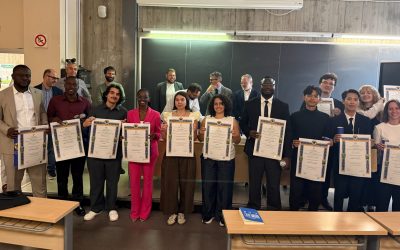
TROPIMUNDO maintains two annual prizes: the Best Student Award (highest course average) and the Lorenzo Borella Memorial Award (highest thesis mark). Recent laureates include students from the Philippines, Colombia, Belgium, and the Netherlands, demonstrating the programme’s global reach and competitive standards.
Career Outcomes
Graduates enter careers in conservation NGOs, government environmental agencies, international organisations (IUCN, UNEP, UNESCO), research institutions, and environmental consultancy. The joint degree and Europass Certificate, signed by all participating institutions, carry significant recognition across Europe and tropical regions.
Contact and Resources
General inquiries: info@tropimundo.eu
GDPR/privacy inquiries: GDPR@tropimundo.eu
Official scholarship page: https://tropimundo.eu/
You apply directly with the provider. We never charge for applications or ask for payment details. How we verify scholarships