
Scholarship Overview
What Is the Tech Policy Press Fellowship?
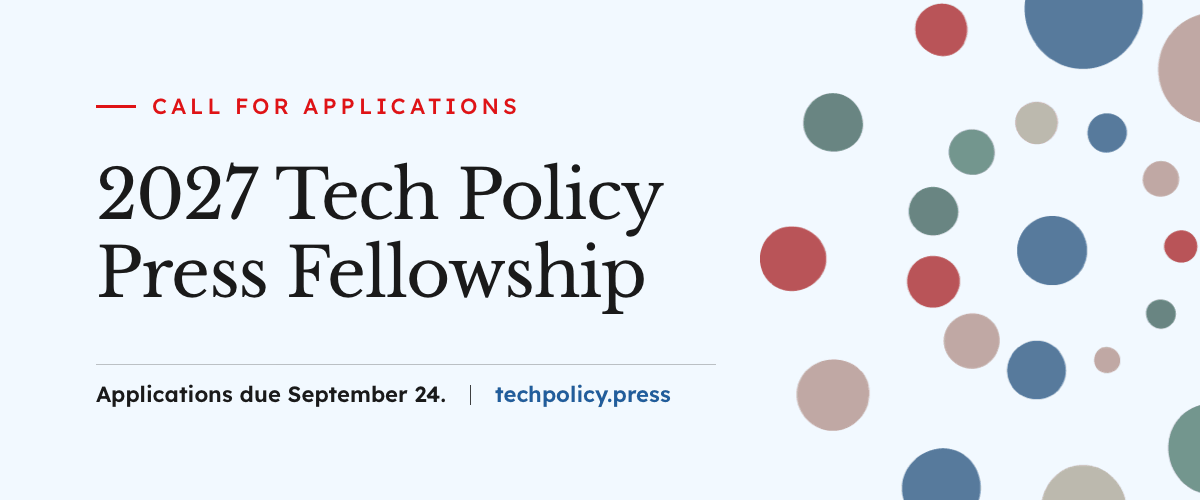
The Tech Policy Press Fellowship is a year-long, part-time program supporting independent reporting and analysis at the intersection of technology and democracy. Since launching in 2023, the program has supported 25 fellows from 11 countries across three cohorts, producing work on AI governance, tech regulation, digital rights, and state-corporate power dynamics.
For 2027, the fellowship continues its mission to amplify underrepresented voices in global tech policy conversations. Fellows work remotely as independent contractors, making this opportunity fully accessible to African applicants regardless of location.
People Also Checked: AWARD Women in Agriculture Leadership Program Fellowship 2026-2028 (Fully Funded)
Financial Support & Benefits
Each fellow receives:
- $10,000 stipend distributed quarterly
- Regular editorial guidance from Tech Policy Press
- Monthly cohort meetings for peer feedback and idea exchange
- Publication platform with broad audience reach via website, newsletter, podcast, and events
- Access to an international network of past and current fellows
- Development of a significant body of work over 12 months
The stipend is designed to support part-time independent work, allowing fellows to maintain other professional commitments.
People Also Checked: International Postgraduate Excellence Award 2027: Complete Guide for African Applicants
Eligibility for African Applicants
The fellowship explicitly welcomes applicants from the Global Majority and underrepresented communities in media. Specific eligibility includes:
- Mid-career journalists, researchers, lawyers, or public policy professionals
- Demonstrated background or expertise in tech policy, media, or related fields
- Commitment to producing high-quality, public-interest work
- Strong command of English (all submissions must include at least one original English piece)
- No requirement for U.S. work authorization—open to candidates worldwide
Applicants from Zimbabwe, South Africa, Nigeria, Kenya, and across the SADC region are strongly encouraged to apply. The fellowship particularly values projects centering communities and regions often excluded from global tech policy discussions.
People Also Checked: Science Without Borders Challenge 2027: International Student Art Contest
Application Requirements
Submit the following by the deadline:
- CV or resume
- Cover letter (maximum two pages) outlining your goals for the fellowship
- Links to prior publications—must be publicly accessible, clearly attributed to you, and published within the past three years. Accepted formats include reported pieces, policy analyses, opinion articles, essays, podcasts, newsletters, or data projects. Social media posts and unpublished material (class assignments, dissertations) are not accepted
- Two professional references who can attest to your writing quality and ability to produce public-interest work
Co-authored work is permitted, but at least one solo publication is recommended. Translations are allowed alongside at least one original English piece.
How to Apply: Step-by-Step Process
Step 1: Review past fellowship work on the Tech Policy Press website to understand the program’s editorial scope.
Step 2: Prepare your cover letter articulating a clear focus area and how your work will inform both public and decision-maker audiences.
Step 3: Gather publication links ensuring they meet all requirements—publicly accessible, attributed to you, within three years, and demonstrating clear writing on complex topics.
Step 4: Identify two professional references who can speak to your relevant experience.
Step 5: Complete the online application form by 11:59 p.m. EDT on September 24, 2026.
Optional: Attend an information session via Zoom—September 9, 2026 (8 a.m. EDT) or September 16, 2026 (7 p.m. EDT). Registration is required.
Fellowship Expectations
Selected fellows must:
- Contribute analysis or reporting at least monthly on technology and democracy issues
- Attend mandatory monthly cohort meetings (one hour)
- Participate in monthly editorial check-ins with Tech Policy Press
- Collaborate with other fellows and editorial staff as appropriate
- Meet all agreed deadlines for individual outputs
- Disclose any potential conflicts of interest
Topics may evolve after the fellowship begins, but applicants should clearly articulate an initial focus and their qualifications to cover it.
Selection Timeline & Competition
The fellowship is highly competitive. The 2026 cycle received over 2,000 applications for 8-10 spots. For 2027:
- Application deadline: September 24, 2026
- Notification of status: Early December 2026
- Fellowship start: January 2027
- Duration: 12 months
A select pool of candidates may be invited for one online interview. References are contacted only for shortlisted applicants.
Tips for African Applicants
Given the competitive nature, consider these strategies:
- Highlight local expertise: Your perspective on tech policy in African contexts is valuable—emphasize how your work addresses gaps in global coverage
- Ensure English proficiency: If your workplace uses AI translation, submit work that demonstrates your personal command of English
- Verify access: Ensure all submitted publications are open access; provide copies if behind paywalls
- Define your niche: A specific geographic or thematic focus strengthens applications—prior coverage by past fellows does not disadvantage you
- Show versatility: Multiple formats (writing, data visualization, audio) are welcomed
Contact & Support
For questions not addressed in the FAQ, email fellows@techpolicy.press.