Scholarship Overview
You apply directly with the provider. We never charge for applications or ask for payment details. How we verify scholarships
People Also Checked: World Leaders Convention 2027: Fully Funded Global Leadership Summit in Vienna (Fully Funded)
Overview
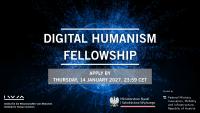
The Institute for Human Sciences (IWM) in Vienna invites researchers to apply for its Digital Humanism Research Fellowship, launching its 2027 cycle with a sharpened focus on artificial intelligence. Since 2022, this program has brought together scholars from computer science to the humanities to explore how technology reshapes democratic societies. From 2027 onward, the fellowship targets three critical areas where AI deployment raises urgent questions for researchers, policymakers, and citizens.
Three Thematic Areas for 2027
Applicants must align their research proposal with one of the following focus areas:
People Also Checked: UN Global Compact Business & Human Rights Accelerator 2027: Corporate Sustainability Programme
AI and (Geo)politics
This stream examines how artificial intelligence intersects with political power and global security. Research might address digital conflicts that merge with physical warfare, AI policy’s geopolitical dimensions, or how political decisions on energy security and raw material supplies shape AI development.
AI and Society
This focus explores social transformations driven by AI adoption. Suitable projects investigate labor market disruptions, widening or shifting social inequalities, and varying societal acceptance of AI across different populations and sectors.
People Also Checked: Yehuda Elkana Fellowship 2027 | CEU PhD in Higher Education Policy (Fully Funded)
AI and Culture
This area addresses how AI transforms cultural creation, distribution, and evaluation. Research may examine synthetic content’s risks to cultural systems, the challenge of maintaining meaning and responsibility in automated cultural production, or new governance frameworks for human-AI cultural coexistence.
Program Structure and Collaboration
The fellowship operates in close collaboration with Vienna’s University of Technology and the broader Digital Humanism initiative in Vienna. Activities draw inspiration from the Vienna Manifesto on Digital Humanism. From 2027, the program will expand collaborations across Austria and internationally.
The program is led by IWM Permanent Fellow Ludger Hagedorn. Administrative support comes from Programs & Grants Manager Neda Deneva.
Funding and Support
The fellowship receives backing from the Austrian Federal Ministry of Innovation, Mobility, and Infrastructure and the Polish Ministry of Science and Higher Education. Specific details regarding stipend amounts, duration, and additional benefits are not published in available materials.
Eligibility
The program explicitly invites researchers from a wide range of disciplines, including but not limited to:
- Computer science and AI/ML research
- Political science and international relations
- Sociology and labor studies
- Cultural studies, media studies, and arts
- Philosophy and ethics
- Law and policy studies
Interdisciplinary collaboration is a core premise. Scholars at various career stages may apply, though specific eligibility criteria regarding degree requirements, career stage, or nationality restrictions are not specified in available sources.
Application Process
Interested researchers should contact Programs & Grants Manager Neda Deneva directly. The research indicates email contact as the primary application pathway:
- Email: [email protected]
- Contact person: Neda Deneva, Programs & Grants Manager
Applicants should prepare a research proposal addressing one of the three thematic areas, demonstrating interdisciplinary relevance and clear connection to the Digital Humanism agenda.
Why African and SADC Researchers Should Consider This
For scholars from Zimbabwe and the SADC region, this fellowship offers several distinctive advantages:
- Geopolitical relevance: The AI and (geo)politics theme directly addresses how Global South nations navigate AI governance amid great power competition—highly relevant to African policy contexts.
- Societal focus: The AI and society stream welcomes research on labor markets and inequality in diverse economic contexts, including informal economies prevalent across SADC.
- Interdisciplinary openness: The program’s explicit welcome of humanities and social science scholars creates opportunities for African researchers whose work bridges technical and contextual expertise.
- Network expansion: The Vienna-based program connects fellows with European technology policy networks while expanding collaborations beyond Austria.
Important Notes
Several key details remain unpublished:
- Application deadline: Not specified
- Fellowship duration: Not specified
- Stipend or financial support level: Not specified
- Number of available positions: Not specified
- Specific degree or career stage requirements: Not specified
Prospective applicants should contact Neda Deneva directly to obtain complete application guidelines and timeline information.
Official scholarship page: https://www.iwm.at/program/digital-humanism-fellowship
You apply directly with the provider. We never charge for applications or ask for payment details. How we verify scholarships