Scholarship Overview
You apply directly with the provider. We never charge for applications or ask for payment details. How we verify scholarships
People Also Checked: University of Toronto OISE Scholarships 2027 for Master's and PhD Students (Funded) (Fully Funded)
Overview
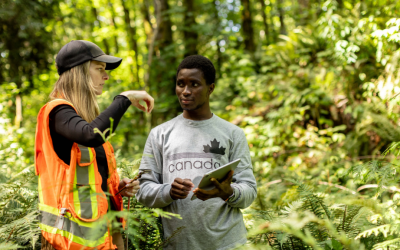
The IDRC John G. Bene Fellowship 2026 supports graduate research that strengthens inclusive, community-led nature-based solutions for forest restoration and food system transformation. Established in 1982 and funded through the Bene Endowment Fund, this annual award enables Canadian students to undertake practical field research in developing countries, with particular emphasis on supporting smallholder farmers, women, youth, and Indigenous communities.
For researchers from Zimbabwe and the broader SADC region with Canadian citizenship or permanent residency, this fellowship offers a structured pathway to conduct fieldwork in your home region while affiliated with a Canadian university. The 2026 call specifically welcomes proposals aligned with IDRC’s REVIVE Initiative on post-fire forest and food restoration.
People Also Checked: Discover Canada Program 2026 | Fully Funded Cultural Exchange in Toronto (Fully Funded)
What the Fellowship Covers
- Number of awards: Up to 10 fellowships
- Maximum amount: CA$30,000 per award
- Duration: 10 weeks to 12 months
- Funding source: Bene Endowment Fund and IDRC
The award supports field research expenses including travel, accommodation, research assistance, and data collection costs in developing country contexts. The fellowship does not cover tuition fees or living expenses in Canada.
Eligibility Requirements
Citizenship and Residency
You must be a Canadian citizen or permanent resident of Canada. Dual citizens with ties to African countries may apply provided they hold valid Canadian status.
People Also Checked: Vancouver Digital Diplomacy Forum 2027 Participation Funding Programme (Fully Funded)
Academic Status
You must be enrolled in master’s or doctoral studies at a Canadian university at the time of application and during the fellowship period.
Academic Background
Your research profile should combine:
- Forest and landscape disciplines: forest management and restoration, forestry, agroforestry, environment, ecology
- Social sciences lens: gender and inclusion, Indigenous knowledge and science, biodiversity conservation, governance of nature
- Food systems expertise
Research Focus
Your proposal must address:
- Gender-responsive integrated forest, landscape and food systems restoration
- Management of fire-prone, degraded, or disputed landscapes
- Nature-based solutions benefiting smallholder farmers
- Climate-food-inclusivity nexus approaches
- Resilience-building for less privileged communities in developing countries
Exclusions
Research focused on genomics and/or genetic modification is not eligible.
Key Dates
- Application opens: October 19, 2026 at 12:00 EDT
- Application deadline: November 30, 2026 at 23:59 EST
The compressed six-week application window requires advance preparation. Start developing your research proposal and securing institutional support well before the opening date.
How to Apply
- Review the Call Document: Download and study the official call document for detailed eligibility criteria and application requirements.
- Develop your research proposal: Design field-based research that explicitly addresses gender responsiveness, community inclusion, and practical outcomes for developing country beneficiaries.
- Secure institutional support: Obtain necessary approvals and letters from your Canadian university.
- Prepare application materials: Compile all required documents (specific list available in Call Document).
- Submit online: Apply through the IDRC application portal once it opens on October 19, 2026.
- Contact for questions: Email benefellowship@idrc.ca
Research Alignment Opportunities
Proposals connecting to IDRC’s REVIVE Initiative on post-fires forest and food restoration receive favorable consideration. This initiative addresses ecosystem recovery after wildfires—a growing concern across southern Africa including Zimbabwe, where fire management intersects with agricultural livelihoods and forest conservation.
Strategic Considerations for African-Canadian Researchers
If you hold Canadian permanent residency or citizenship with roots in Zimbabwe or SADC countries, this fellowship offers distinct advantages:
- Field access: Your existing networks and language skills facilitate community entry and trust-building
- Relevance: Research on fire-prone landscapes and disputed territories resonates with regional challenges including climate-induced degradation and land tenure complexities
- Knowledge translation: Your dual perspective strengthens capacity to translate findings into actionable policy for both Canadian and African institutions
When framing your proposal, explicitly articulate how your positionality enables ethical, effective community engagement and how your research will build lasting institutional partnerships between Canadian and African research entities.
About IDRC and the Bene Legacy
The International Development Research Centre (IDRC) has supported graduate research in international development since 1982. The Bene Fellowship honors John G. Bene, whose bequest established this enduring commitment to forest and development research. IDRC’s emphasis on inclusive, community-led approaches aligns with contemporary development paradigms prioritizing local agency and Indigenous knowledge systems.
Official scholarship page: https://idrc-crdi.smapply.io/prog/john_g_bene_2026_fellowship_strengthening_inclusive_community-led_nature-based_solutions_for_forest_restoration_and_food_system_transformation/
You apply directly with the provider. We never charge for applications or ask for payment details. How we verify scholarships