
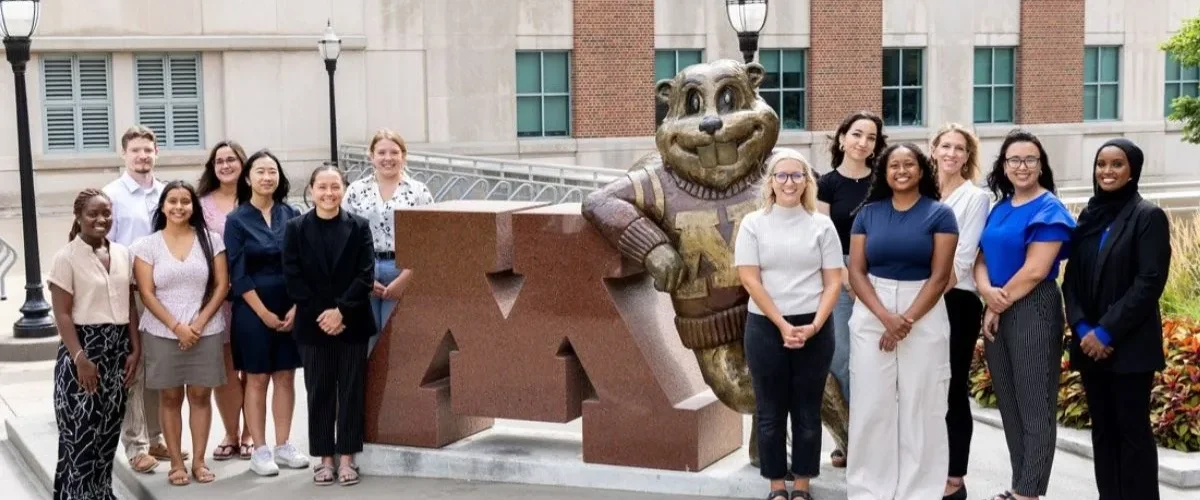
Scholarship Overview
You apply directly with the provider. We never charge for applications or ask for payment details. How we verify scholarships
People Also Checked: UNU-WIDER Visiting PhD Fellowship 2026: Complete Guide & How to Apply (Fully Funded)
Overview
The University of Minnesota Conservation Sciences Program invites applications for a fully funded PhD graduate assistantship beginning in 2026. This research position partners with Bemidji State University and the Fond du Lac Band of Lake Superior Chippewa to study white-tailed deer health and disease ecology.
The selected candidate will conduct field-intensive research examining deer population health dynamics and their relationship to management practices and survival rates. Health data generated will support disease risk analysis for potential elk translocation efforts.
People Also Checked: IFRA-Nigeria Research Grants 2027: Humanities & Social Sciences Fieldwork Funding
What the Scholarship Covers
This graduate research position provides comprehensive financial support:
- Living stipend: $30,300 per year
- Tuition coverage: Full tuition fees paid
The funding package allows recipients to focus entirely on their doctoral research without financial burden.
People Also Checked: World Bank Group Young Professionals Program 2026: Complete Guide (Fully Funded)
Research Focus and Responsibilities
The PhD project involves substantial hands-on work across multiple domains:
- Planning and implementing extensive field work
- Data collection and management
- Laboratory activities
- Advanced epidemiological and ecological modeling
Candidates should expect to work long hours outdoors in extreme weather conditions. The position demands independence, precision, and collaborative capacity with external partners including indigenous communities.
Who Can Apply
This opportunity is open to applicants from 251 countries including Nigeria and all African nations. There is no language proficiency requirement specified.
Academic Requirements
- Bachelor’s degree in wildlife biology, ecology, or closely related field
Essential Skills and Attributes
- Strong work ethic
- Excellent oral and written communication skills
- High attention to detail
- Ability to work independently
- Capacity to collaborate with external partners
- Deep respect for indigenous sovereignty
- Dedication to cultivating respectful partnerships with indigenous communities in research
- Positive attitude and amicable personality for team living/working environments
- Willingness and ability to work long hours in extreme field conditions
Preference
Preference will be given to candidates with Native American heritage.
Eligible Fields of Study
Applicants with backgrounds in the following areas are encouraged to apply:
- Animal and Environmental Biology
- Animal Biology and Environment
- Applied Biology
- Applied Microbiology
- Biochemistry and Molecular Biology
- Biology
- Ecotourism and Wildlife Management
- Fisheries and Wildlife Management
- Forestry and Wildlife Technology/Management
- Forestry, Wildlife and Fisheries
- Environmental Biology
- Microbiology
- Pure and Applied Biology
- Wildlife and Eco-Tourism
Application Documents
Submit a complete formal application package through Slate including:
- Cover letter highlighting relevant experiences and interest in graduate training
- CV/resume
- Unofficial transcripts
- Three references
No essay is required for this application.
How to Apply
- Access the scholarship announcement page through the official application portal
- Submit your formal application package via Slate
- Ensure all required documents are included
- Submit before the deadline
Contact for Inquiries
For additional questions regarding this opportunity, contact:
Dr. Tiffany Wolf
Email: wolfx305@umn.edu
Important Dates
| Application Deadline | November 30, 2026 |
| Program Start | Not specified (assume 2027 academic year) |
Why This Matters for African Applicants
For researchers from Zimbabwe and the SADC region, this position offers rare access to North American wildlife management systems and indigenous partnership models. The skills developed—epidemiological modeling, disease risk analysis, and cross-cultural research collaboration—are directly transferable to African contexts where wildlife disease management affects both conservation and livelihoods.
The explicit value placed on indigenous sovereignty and community partnership provides a framework applicable to community-based natural resource management approaches familiar to many African conservation contexts.
You apply directly with the provider. We never charge for applications or ask for payment details. How we verify scholarships